 Skip to content
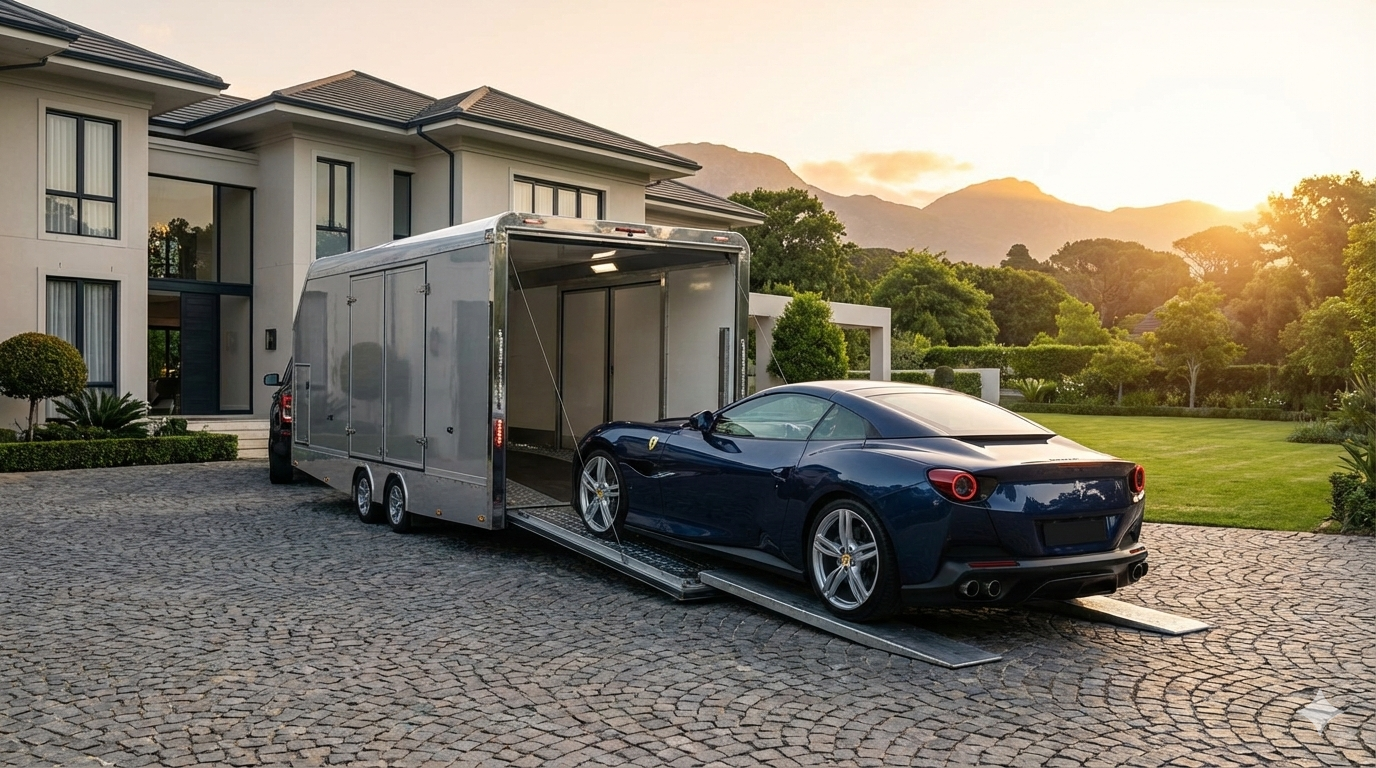
Enclosed car transport is a premium auto transport service designed for vehicles that need added protection during shipping. If you’re searching for how enclosed car transport works, how much enclosed car shipping costs, or whether it’s worth it for your vehicle, this guide breaks it down clearly.
You’ll learn the differences between enclosed and open transport, what impacts enclosed auto transport quotes, and who benefits most from this service; whether that’s luxury vehicle owners, classic car collectors, or anyone moving a high-value vehicle long distance.
By the end, you’ll know exactly what to expect from enclosed car haulers, how pricing is calculated, and when this option makes sense for your situation.
Interested in seeing how enclosed transport compares for your specific vehicle?
Table of Contents
- What Is Enclosed Car Transport?
- Why People Choose Enclosed Protection
- How Pricing Works for Enclosed Car Transport
- Key Factors That Affect Your Quote
- What the Enclosed Transport Process Looks Like
- Who Should Consider Enclosed Car Transport
- Common Myths About Enclosed Shipping
- How to Compare Quotes
- Get a Quote
What Is Enclosed Car Transport?
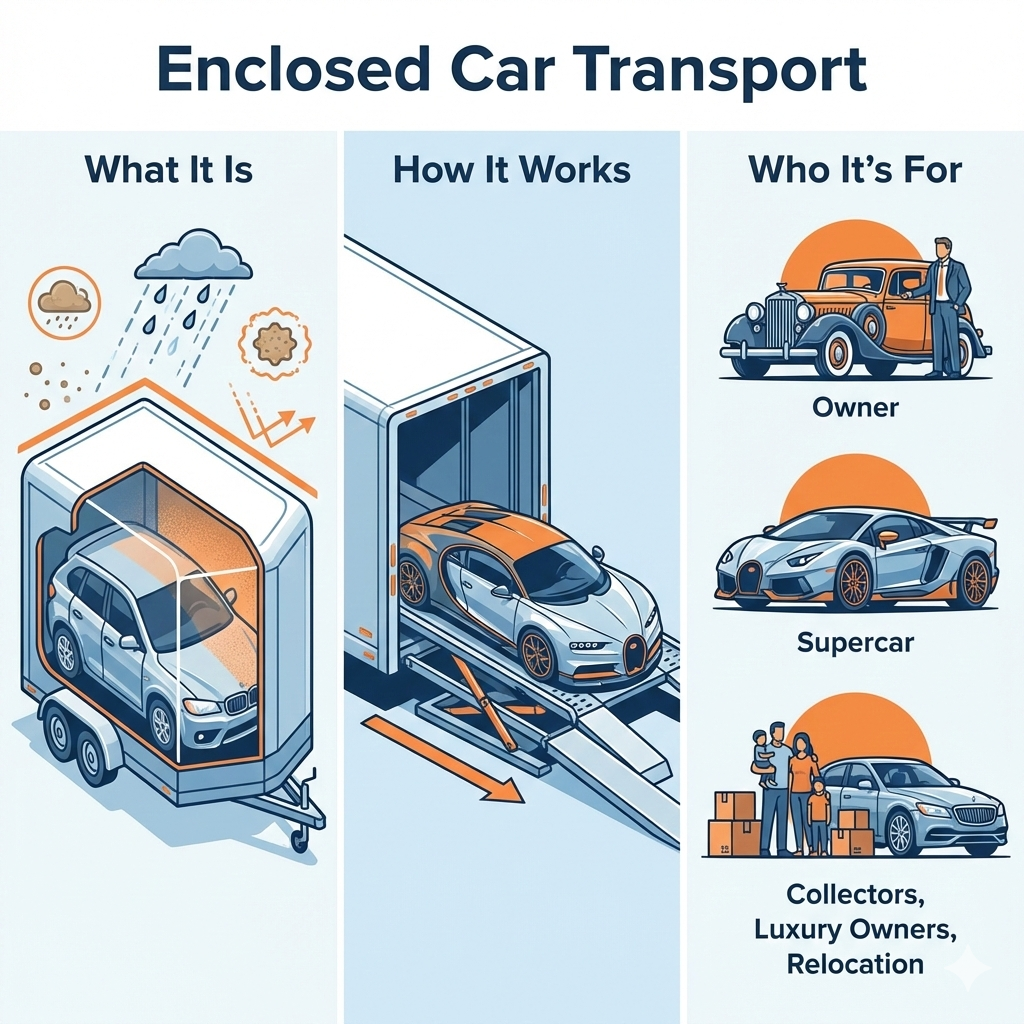
When you choose enclosed car transport, your vehicle is hauled inside a covered carrier that protects it from weather, road debris, dust, and other external elements. This service is a specialized tier of car transportation services within the broader auto transport industry and is often selected by owners who want extra peace of mind during transit.
Unlike open carrier transport, where vehicles are exposed to the outdoors, enclosed carriers look more like moving vans. They are less common, and availability can be limited depending on season and route.
According to market data, enclosed carriers accounted for approximately 25% of all car shipping shipments worldwide in recent years, reflecting the demand among owners of high-value vehicles.
Enclosed transport is part of a full-service auto transport service offering that includes pickup, secure loading, transit, and delivery.
Why People Choose Enclosed Protection
Enclosed car transport is not for every vehicle, but it becomes the clear choice in several common situations:
A. Protecting High-Value Vehicles
Owners of luxury cars, exotics, or collector cars often prefer enclosed carriers to reduce exposure to wind, rain, dust, and road debris. Standard open carriers move most everyday cars without issue, but for vehicles where every detail matters, enclosed transport offers another level of protection.
Industry data underscores this trend: luxury and specialty vehicles make up a significant share of enclosed shipments.
B. Classic and Vintage Cars
Classic and vintage vehicles are often irreplaceable. Owners who invest in maintenance and preservation want to avoid any chance of damage. The higher cost of enclosed transport can be worthwhile when the vehicle’s value extends beyond the monetary to sentimental or collector status.
C. Long-Distance Moves
When vehicles are shipped across states or coast-to-coast, the chances of encountering varied weather and road conditions increase. In such cases, enclosed carriers help maintain your car’s condition from origin to destination.
How Pricing Works for Enclosed Car Transport
Understanding price dynamics helps you interpret an enclosed auto transport quote when comparing options.
Industry figures show that overall vehicle shipping costs can vary widely, depending on service type and distance. For example:
- Open transport averages $1,100–$2,100 for typical shipments.
- Enclosed carrier options generally range from $1,800–$2,600.
These ranges are not hard limits, but they represent commonly observed figures in the market. Notably, enclosed transport usually carries a premium of 30–60% compared with open carriers because of the added space, equipment, and service level required.
Why Enclosed Costs More
- Lower supply: Fewer enclosed car haulers operate compared to open carriers.
- Higher overhead: Enclosed trailers cost more to maintain and operate.
- Special handling: Drivers may use ramps, lifts, and extra padding to protect vehicles.
- Demand patterns: Classic, luxury, and high –value vehicles often book earlier and at a higher rate.
Even with higher costs, many owners view this as value for protection when shipping cars with significant investment or sentimental value.
Key Factors That Affect Your Quote
When assessing enclosed auto transport quotes, several variables influence pricing:
A. Distance
As with all vehicle shipping, longer distances generally increase total cost. However, price per mile can decrease as trips get longer because carriers optimize routes.
B. Vehicle Type and Size
A larger SUV or a specialty vehicle may cost more to transport than a sedan due to weight and space considerations. Larger vehicles require more room on the carrier and may limit how many can fit during a single shipment.
C. Pickup and Delivery Options
- Door-to-door services add convenience but usually cost more.
- Terminal-to-terminal options can lower cost if flexibility is acceptable.
D. Timing and Season
Certain times of year; like summer or snowy winter months, see higher demand and pricing increases. Planning your shipment during off-peak times can help you save.
E. Service Add-Ons
Special requests like expedited pickup windows, guaranteed delivery dates, or enclosed auto transport quotes that include additional insurance or handling may add to your final cost.
Understanding these variables makes it easier to interpret what’s driving your quote, rather than just seeing a number without context.
Get an exact enclosed car transport quote for your route and vehicle.
What the Enclosed Transport Process Looks Like
The enclosed transport experience is similar to other auto transport service options, with a few notable steps:
Step 1: Request a Quote
Provide your vehicle details, pickup and drop-off locations, and desired service type. You’ll receive enclosed auto transport quotes tailored to your needs.
Step 2: Booking
Once you accept a quote, your shipment is scheduled. Most reputable carriers or brokers confirm a pickup window rather than a set time to allow for logistical planning.
Step 3: Pickup and Inspection
A professional transporter arrives to inspect and load your vehicle into an enclosed carrier. This step includes a condition check, documented in a bill of lading that notes existing vehicle condition and accessories.
Step 4: Transit
During transport, your vehicle is protected from road debris and weather because of the enclosed design. Even in long cross-state moves, this keeps exposure to a minimum.
Step 5: Delivery
Upon arrival, the carrier unloads your vehicle and documents its condition again. Any discrepancies are noted before you sign off on the delivery.
Each stage of the process focuses on visibility, documentation, and accountability; key areas that differentiate premium enclosed services from basic transport options.
Who Should Consider Enclosed Car Transport
While most everyday vehicles can be shipped via standard open auto transport service, enclosed carriers are best for a narrower set of needs:
Luxury Vehicle Owners
For vehicles valued significantly above average, enclosed carriers minimize exposure to dust, rain, and road debris.
Collectors and Enthusiasts
Classic cars, rare models, or show vehicles often have finishes, components, or detailing that owners want fully protected.
High-End Custom Vehicles
If your vehicle has custom paint, aftermarket parts, or sensitive modifications, enclosed transport can help maintain those enhancements throughout the journey.
Long-Distance Shippers with Value Concerns
The longer the distance, the more variables matter. Owners who value condition and preservation choose enclosed carriers for this reason.
Each of these groups prioritizes protection over cost savings, and that prioritization is what defines the value of enclosed transport as a service.
Common Myths About Enclosed Shipping
There are several misconceptions around enclosed car transport that can lead people to make uninformed decisions:
Myth: Enclosed Transport Is Only for Exotic Cars
Not true! While luxury and exotic vehicles are common candidates, any vehicle with high personal or financial value can benefit from the added protection.
Myth: Enclosed Quotes Are Always Double the Cost
Premium costs are real, but the difference varies. Industry data suggests enclosed options often cost 30–60% more, not necessarily double, depending on distance and route.
Myth: All Car Haulers Charge the Same
Quotes can differ significantly based on carrier relationships, seasonal demand, and route optimization.
Understanding the facts helps you set realistic expectations rather than relying on assumptions.
How to Compare Quotes
When you receive enclosed auto transport quotes, compare them on more than just price. Consider:
- Whether the quote includes door-to-door delivery
- Insurance coverage levels and deductibles
- Pickup and delivery window flexibility
- Carrier licensing and reputation
A quality quote from a reputable car transportation service will be detailed and transparent, helping you avoid unexpected fees or delays later.
Get a Quote
Enclosed car transport offers valuable protection for select vehicle owners. If your priority is preserving condition during transit; whether due to vehicle value, sentimental worth, or long routes, this service is worth evaluating.
Fill out the form below and get a quote today to compare enclosed auto transport prices based on your vehicle, route, and service preferences.
Final Notes
Choosing the right auto transport service means matching your vehicle, priorities, and budget. Enclosed car transport is a premium option that many owners select for peace of mind. With the right planning and accurate quotes, you can move your vehicle with confidence.
